Wiring & Electrical Restoration — Houston, TX

Wiring & Electrical Restoration
The Nervous System, Rebuilt

Gremlins are just deferred wiring decisions.

Sixty-year-old copper with crumbling insulation is the most common fire risk in the classic car hobby — and the most common reason a beautiful restoration sits in the garage "acting up." We rewire methodically: labeled, fused, and documented, so every circuit does its job for the next fifty years.

200+Restorations Completed
AllMakes & Eras
18Years in Houston
5.0★Google Rating
Our Position

Why Electrical Work Is the Most Skipped Job in Restoration

Wiring is invisible, so it loses the budget fight to paint every time — until the tail lights flicker, the ammeter pegs, or the smell of hot insulation ends a Sunday drive. Our conviction after 18 years: the harness is a consumable that almost nobody consumes. Insulation from the 1960s was engineered for a 20-year life. Every original-harness classic on the road is 40 years past the design margin.

So we treat electrical as a restoration system, not a repair category. Chasing one bad circuit through brittle, sun-baked, splice-scarred wiring is billable archaeology; replacing the harness correctly — factory-style routing, correct gauge, real fusing — is engineering. We'll always tell you which one your car actually needs, and on any car that gets driven regularly, the answer is usually the honest full job once rather than the gremlin subscription forever.

"Every electrical gremlin is cheap to fix exactly once — at the harness."
Scope, Honestly

What Our Wiring and Electrical Restoration Covers

What It Is

Complete harness replacement with factory-correct or modern reproduction looms; charging system rebuilds and alternator conversions; ignition system restoration; gauge and cluster repair; lighting circuits; grounds and bulkhead connectors renewed; and methodical diagnosis when a full rewire isn't warranted.

What It Unlocks

A classic that starts every time, charges at idle with the headlights on, and never dims, flickers, or blows a mystery fuse. Gauges that read true. And the quiet confidence of knowing the circuit behind your dashboard isn't the original 1966 lighting feed running warm through a rotted grommet.

Where It Stops

We don't do stereo-shop work — competition audio, light shows, or accessory stacking beyond what the charging system supports. And we won't splice new problems into a harness that's past saving just because a rewire "wasn't in the budget." We'll show you the insulation and let the wire make the argument.

The Work

Harness Replacement and Charging Upgrades in Detail

A rewire starts with a circuit inventory: what the car has, what previous owners added (usually badly), and what you want it to power — A/C, EFI, electric fans, modern lighting. That load math sizes the charging system honestly. A 37-amp 1965 alternator was never going to carry an air-conditioned restomod, which is why charging upgrades and restomod electrical packages are designed together, not bolted on later.

Installation is where discipline shows. Looms routed exactly where the factory ran them, correct-gauge wire throughout, every splice soldered and sealed — no crimp-tap connectors, ever. Grounds get the attention they never get elsewhere: cleaned, indexed ground points and a proper engine-to-body strap, because half of all classic electrical faults are grounds wearing a different symptom's costume. Bulkhead connectors — the notorious failure point on Mopars especially — are renewed or upgraded with modern terminals inside original-appearance shells.

Gauges, clusters, and switchgear come back to life on the same bench: printed-circuit repairs, voltage limiters replaced, ammeter circuits converted safely where prudent. Under-dash work is coordinated with our interior restoration team so the dash comes out once, not twice — the kind of sequencing our build process exists to enforce.
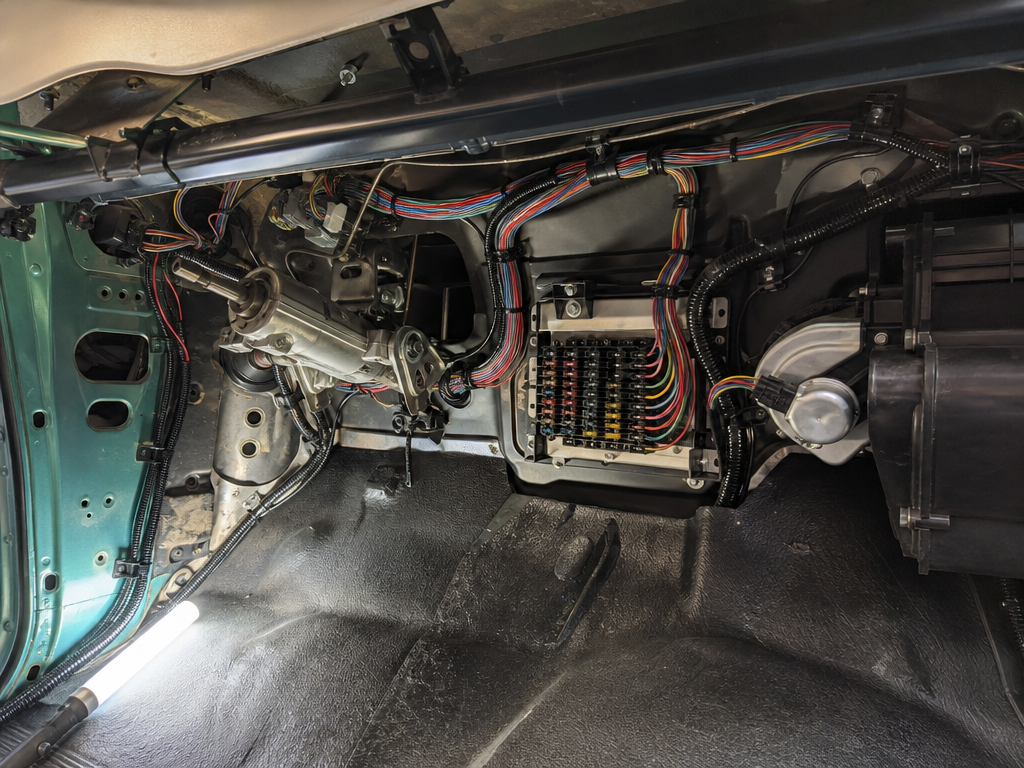
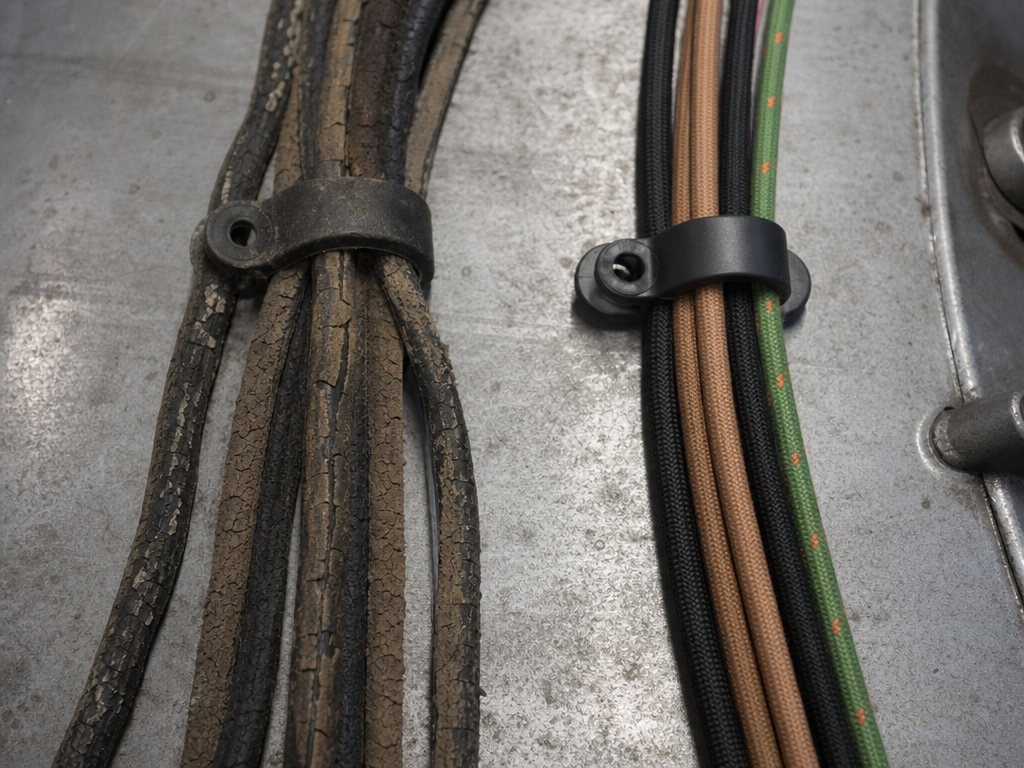
New wiring harness routed under the dash of a classic car Cracked original wiring beside new reproduction harness
What We Find

Electrical Problems We Find in Classic Cars

Fifty Years of Splices

Every previous owner left a repair: twisted-and-taped joints, lamp cord feeding fog lights, accessory wires looped straight off the battery. We photograph the horrors for your records, then remove all of them.

Cooked Bulkhead Connectors

The firewall connector carries the whole car's current through terminals that corrode and heat-cycle until they melt — the classic Mopar no-start and the GM flickering-dash. Renewal here fixes "haunted" cars weekly.

Ground Faults Wearing Costumes

Brake lights that blink the dash, horns that honk on left turns — comedy symptoms with one boring cause: corroded grounds finding creative return paths. Humid climates breed them; methodical ground renewal cures them.

Overloaded Original Charging

Generators and early alternators asked to run added A/C, fans, halogens, and a stereo. The battery slowly loses the war and gets blamed for it. We do the load math and size the system to the actual car.

Local Conditions

Gulf Humidity and Classic Car Electrics — a Bad Combination

Copper, brass, and steel connectors all corrode faster in our air than almost anywhere inland — and corrosion is resistance, and resistance is heat and failure.

Houston humidity works on electrical systems the same way it works on body panels: from the inside of connections outward. Moisture wicks into unsealed terminals and up inside insulation, oxidizing strands until a circuit that measures fine cold fails warm. Cars stored in un-climatized garages — most of the metro — corrode at rest. That's why our terminal standard is sealed or dielectric-greased connections everywhere the factory's bare brass used to live, and why coastal-side cars from Baytown and League City get marine-grade attention as a default.

Heat is the other half. Engine-bay temperatures here cook insulation brittle years faster than northern climates, and vinyl-jacket wire from the sixties turns to potato chips against a Texas exhaust manifold. Modern cross-linked insulation shrugs off what killed the original harness — one of several places where correct-appearance reproduction wiring is quietly better than what the factory installed.

And because electrical work hides inside otherwise-finished cars, it's the stage most often blamed for schedule surprises. It shouldn't be — we explain how wiring fits honest project scheduling in how long a full restoration really takes.

The Quality Gap

A Rewire Done Right vs. a Patch Job

Platform experience matters here more than anywhere: Mopar bulkhead and ammeter circuits on Barracudas and their E-body kin fail in one signature way, GM F-body Firebirds in another. Knowing the pattern is half the diagnosis.

Materials & Sourcing

Harnesses and Electrical Components We Install

How It Works

Our Electrical Restoration Process from Audit to Handoff

01

Audit

Circuit-by-circuit inventory, load math, and an honest verdict: targeted repair or full rewire.

02

Plan

Harness selection, charging spec, and added-accessory circuits designed on paper first.

03

Install

Factory routing, soldered joints, renewed grounds and bulkheads, everything labeled.

04

Verify

Every circuit load-tested, charging verified at idle with full accessories, voltage drops measured.

05

Document

Wiring diagram, fuse map, and photos delivered with the car — the glovebox gets a manual.

Questions We Hear

Wiring and Electrical Restoration FAQs

Not always — and we'll say so. A dry-climate car with sound insulation may need only targeted repairs and new grounds. But if insulation cracks when flexed, previous splices are multiplying, or you're adding real electrical load, the full harness is the honest answer. The audit tells us which car you have.

Yes. Factory-correct reproduction harnesses match original wire colors, connectors, and wrap by year and model — judges see what the assembly line installed. The improvements (modern insulation, better terminals) hide inside the correct appearance.

That's a house specialty. Intermittents are almost always heat- or vibration-dependent resistance — a corroded ground, a fatigued bulkhead terminal, a chafed loom — and they surrender to methodical measurement, not parts-cannon guessing. Bring us the car and its history; the gremlin is real and it is findable.

If the car is driven and carries any added load — A/C, halogens, electric fan — yes, and period-style cases keep it discreet. If it's a judged, factory-correct car, we'll rebuild the generator system to spec instead. Mission decides, and both are done properly here.

A complete harness replacement on an assembled car typically runs 3 to 5 weeks including verification. Inside a full restoration it's faster — the harness goes in while the interior is out, which is exactly how we sequence it.

Service Coverage

Classic Car Electrical Work Across Greater Houston

Electrical patients arrive from the whole metro — some driven in bravely, some trailered after the last no-start. Either way, they leave with a diagram in the glovebox.

Retire the Gremlins for Good

Describe the symptoms — the flicker, the click, the fuse that blows on rainy Tuesdays. We'll audit the system and quote the fix that actually ends it.

(713) 555-0180