Interior Restoration — Houston, TX

Classic Car Interior Restoration
Correct Down to the Stitch

The part of the car you actually live in.

You see the paint for ten seconds walking up to the car. You sit in the interior for every mile. We restore cabins to period-correct patterns, grains, and stitch counts — because "close enough" reads wrong every single time you open the door.

200+Restorations Completed
AllMakes & Eras
18Years in Houston
5.0★Google Rating
Our Position

Why Interior Restoration Deserves the Same Standard as Paint

Interiors are where otherwise serious restorations go cheap — a universal seat kit stretched over collapsed springs, glued-up door panels, carpet the wrong loop and the wrong color. Here's our conviction: the interior isn't an accessory to the restoration. It IS the restoration, because it's the only part of the car the owner touches every time they drive.

Factory interiors were specific. A '65 Impala's grain pattern, a Mustang Pony interior's embossed ponies, the ribs on a Mopar bench — these weren't generic, and restoring them generically is how a $100,000 build ends up feeling like a $30,000 one from the driver's seat. We restore to the trim tag: correct pattern, correct grain, correct stitch style, correct fasteners behind panels no judge will ever remove. Because we'd know.

"Nobody falls in love with a car from the outside. They fall in love from the driver's seat."
Scope, Honestly

What Our Interior Restoration Service Covers

What It Is

Complete cabin restoration: seat frames, springs, foam, and upholstery; headliners and sail panels; dash pads, instrument clusters, and bezels; door panels and armrests; carpet sets, package trays, kick panels, and weatherstrip. Steering wheels restored or correctly replaced. All fitted in-house.

What It Unlocks

A cabin that looks, smells, and feels like the car did in its first year — or better, if you choose upgraded foam and sound deadening under original-appearance covers. Working gauges, tight door panels, a headliner without a single wave. The experience of the car, restored.

Where It Stops

We don't do modern custom interiors — billet, digital dashes, bucket-swap "lounge" builds. Tasteful hidden upgrades, yes. If your vision is a full custom cabin, we'll say so up front and stay in our lane: factory-correct restoration done at the highest level.

The Work

Upholstery, Dash, Headliner, and Trim Work in Detail

A proper interior restoration starts at the metal, not the fabric. Seat frames come apart for cleaning, repair, and re-plating of adjusters and tracks; burlap and springs are replaced or re-tied; foam is shaped to factory contour so the seat holds you the way it did new, not the collapsed way it held its last owner. Only then do covers go on — steamed, stretched, and hog-ringed so seams land exactly on the factory lines.

Dashes are their own discipline: pads restored or replaced, gauges cleaned and calibrated with faces and needles correct, chrome bezels sent across our own shop to the chrome and trim restoration bench rather than to a mystery plater. While the dash is out we inspect every inch of under-dash harness — brittle insulation gets flagged for wiring and electrical restoration now, because there is no cheaper moment to fix it than with the dash already on the bench.

Headliners go in over new bows with the backing glass out — the only way to get tension right without waves. Carpet is molded, correct loop and color, laid over new sound deadener and seam-sealed floors. On full builds the interior lands late in the sequence by design; our build process puts fresh upholstery into the car only after paint and mechanical work can no longer threaten it.
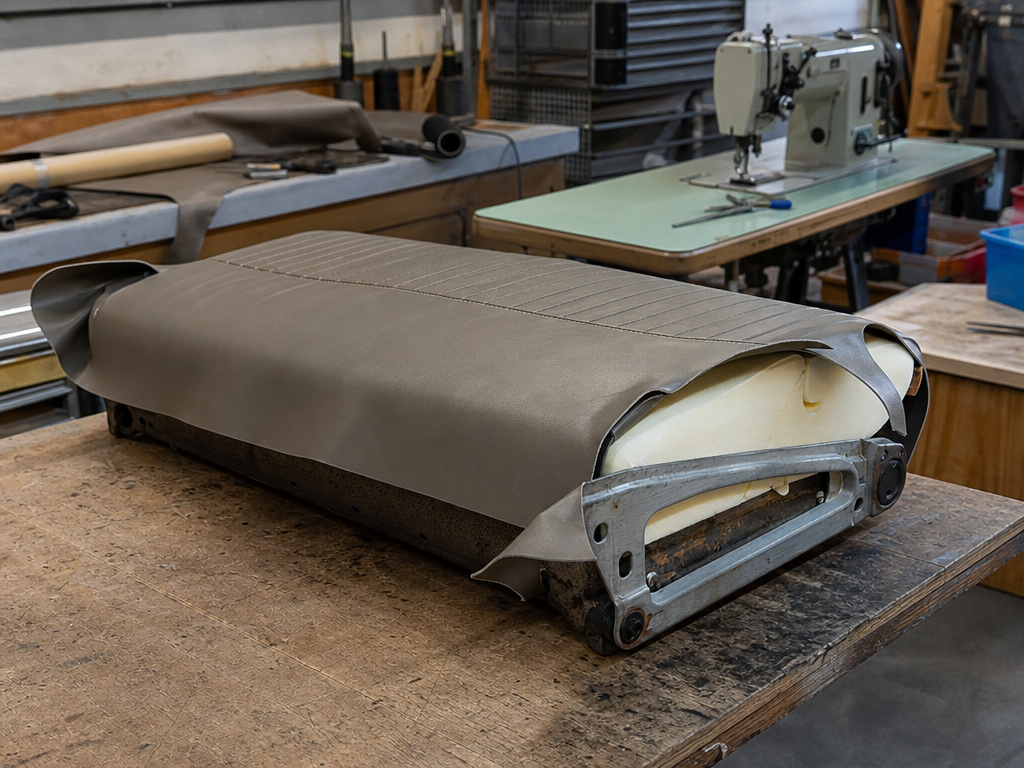
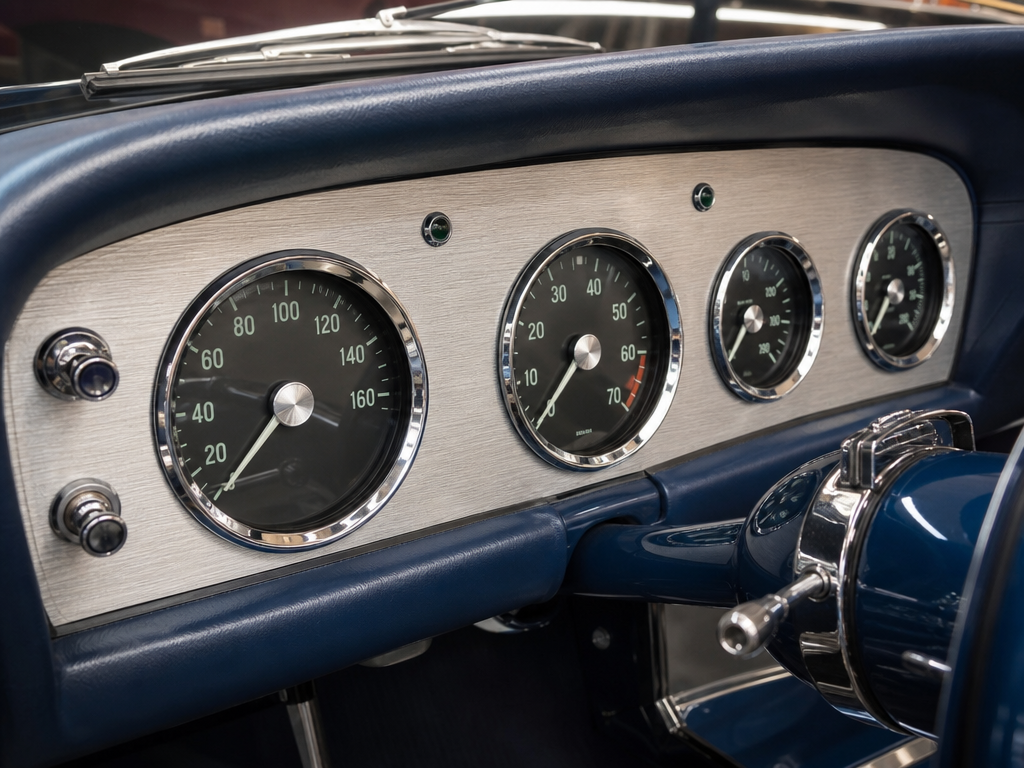
Seat upholstery being fitted during a classic car interior restoration Restored dashboard and gauge cluster in a classic car
What We Find

Interior Problems We Find in Fifty-Year-Old Cars

Rotted Seat Foundations

Covers hide collapsed springs, rusted frames, and disintegrated burlap. A re-cover over a bad foundation looks right for a year and sits wrong forever. We rebuild seats from the frame out — it's the only version worth paying for.

Floor Rust Under Carpet

Decades of wet carpet quietly perforate floor pans. We pull interiors expecting it — and when we find it, the car visits the metal bench before a single yard of new carpet goes down. Interior over rust is money thrown away.

Sun-Destroyed Dash & Plastics

Cracked pads, warped bezels, yellowed lenses, crumbled armrests. Texas sun is merciless on 1960s vinyl and ABS. We restore originals where they're viable and fit the correct reproductions where they're not — and we can tell the difference.

Rodent & Storage Damage

Cars that sat for years come with chewed insulation, nested seat cavities, and odors that never leave soft trim. Full strip-out, sanitize, and rebuild is the honest fix — masking it never works past the first hot week.

Local Conditions

What Texas Sun and Gulf Humidity Do to Classic Interiors

Houston attacks interiors on three fronts — heat, UV, and moisture — and every material choice we make answers one of them.

Cabin temperatures in a parked car here exceed 140°F all summer. Vinyl plasticizers cook off, foam hardens, adhesives let go — it's why so many local classics wear drooping headliners and lifting door-panel edges. We spec adhesives and foams rated for that heat, and back headliners and roof skins with modern insulation that drops the cabin load dramatically.

Gulf humidity is the quieter killer: mildew inside seat foam, corrosion on seat tracks and springs, and moisture wicking into carpet backing every night the car sits in an un-climatized garage in Cypress or Pearland. Our answer is closed-cell padding, treated frames and hardware, and floors sealed properly before carpet — plus straight advice about dehumidified storage for cars that sit between weekend drives.

And UV through glass fades dyed materials unevenly — the dash top dies while the door panels survive. On show cars we restore all surfaces together so color matches across every panel from day one, rather than patching one faded piece against another.

The Quality Gap

Period-Correct Interior Work vs. Universal Kits

Pattern-specific interiors are where platform knowledge pays: a Mustang Pony interior and a Tri-Five Bel Air's woven-insert benches are entirely different crafts, and we've done both enough times to know their traps.

Materials & Sourcing

Interior Materials We Source — and What We Reject

How It Works

Our Interior Restoration Process, Start to Finish

01

Consult

We document the interior as-is, read the trim tag, and agree on correct-vs-upgraded choices.

02

Strip & Assess

Full interior out; floors, harness, and structure inspected while everything is accessible.

03

Foundation Work

Frames, springs, floors, deadener, and any flagged wiring handled before soft trim.

04

Trim & Fit

Upholstery, headliner, dash, panels, and carpet fitted to factory lines — no waves, no wrinkles.

05

QC & Delivery

Every switch, gauge, latch, and seat track verified working; final photos join the build record.

Questions We Hear

Classic Car Interior Restoration FAQs

Sometimes — and when we can, we prefer to. Sound original upholstery can often be cleaned, re-dyed, and re-padded, which preserves value on survivor-grade cars. We assess honestly: if the material is structurally done, restoration money is better spent on correct reproduction.

Both. Plenty of cars come in just for seats, a headliner, or a dash restoration. We'll tell you if a partial scope will clash visibly with the rest of the cabin — faded surrounding trim against fresh vinyl is a real thing — but the choice is yours.

Yes — this is our favorite kind of request. Modern foam densities, added lumbar shaping, sound deadening, and heat insulation all hide completely under factory-correct covers. The cabin looks 1968 and rides like it never did.

A complete interior typically runs 6 to 10 weeks as a standalone project, driven mostly by material lead times — correct fabric and dash components can take weeks to arrive. Inside a full build, interior work is sequenced after paint so it's never rushed.

Yes. The trim tag tells us the factory color and material code, and we source pattern-correct reproductions against it. If you'd rather change colors, we'll show you period-available combinations so the cabin still reads factory-authentic.

Service Coverage

Classic Car Interior Restoration Across Greater Houston

Interior projects arrive from all over the metro — some driven in, some trailered, some as boxes of seats and door panels. However your project exists today, we can start there.

Love the Car from the Driver's Seat

Send us photos of the cabin and the trim tag. We'll tell you what's restorable, what's replaceable, and what it takes to make the inside match the outside.

(713) 555-0180