Chrome & Trim Restoration — Houston, TX

Chrome & Trim Restoration
The Jewelry of the Car

Brightwork makes or breaks the whole restoration.

Perfect paint framed by pitted chrome reads as a cheap car. We restore the brightwork — bumpers, grilles, stainless, pot metal, and anodized aluminum — to the same standard as everything else we build, because trim is the first thing every judge and every buyer actually touches.

200+Restorations Completed
AllMakes & Eras
18Years in Houston
5.0★Google Rating
Our Position

Why Brightwork Deserves a Specialist, Not an Afterthought

Here's a pattern we've watched for 18 years: a restoration budget gets built around paint and engine, and the trim line-item says "polish existing." Then the car comes together and every eye goes straight to the cloudy stainless and the orange-peeled rechrome from the cheapest plater in the state. Our position: brightwork is not a detail. On a 1950s car it's a third of the visual surface, and it's the part your hand touches every time you open a door.

Trim restoration is also where irreplaceable meets unforgiving. Much of this material — pot metal castings, one-year-only stainless spears, anodized aluminum panels — is not reproduced, and every buffing wheel pass removes metal that no supplier can sell you back. That's why our bench treats each piece as the only one: straighten, repair, and finish with the discipline of people who know the replacement doesn't exist.

"Paint gets the photos. Chrome gets the stares."
Scope, Honestly

What Our Chrome and Trim Restoration Service Covers

What It Is

Complete brightwork restoration: bumpers straightened and triple-plated (copper-nickel-chrome), grilles and die-cast pot metal repaired and re-plated, stainless trim dent-removed and mirror-polished in-house, anodized aluminum stripped and refinished, and interior brightwork — bezels, handles, horn rings — restored to match.

What It Unlocks

A finished car that reads correct from every angle — deep chrome that mirrors like the showroom floor, stainless that runs a straight line of light down the body, emblems and bezels crisp instead of tired. It's the difference between a repainted car and a restored one.

Where It Stops

We don't do decorative "chrome-look" spray coatings, and we won't buff plating that's already thin down to brass just to sell a shine. When a piece is beyond honest restoration, we tell you and hunt the market for a better core — the process we describe in sourcing parts for a 50-year-old car.

The Work

Re-Plating, Stainless Polishing, and Pot Metal Repair in Detail

Stainless is the craft we're proudest of, because it's pure handwork. Every spear and molding gets annealed where needed, dents hammered out from behind on hardwood and steel forms, files and progressively finer abrasives leveling the surface, then a staged buff to a mirror without rounding the crisp factory character lines — the mistake that makes over-buffed trim look melted. It's slow. It's supposed to be.

Plated pieces follow the full triple-plate discipline: old chrome and nickel stripped, the base metal straightened and metal-finished, then copper plated and sanded — sometimes through several cycles — until the surface is flawless, because chrome is a mirror of whatever sits under it. Nickel gives the depth, chrome gives the color. Show plating is a chemistry-and-prep game, and prep is 90 percent of it.

Pot metal is the hard case: sixty-year-old die-cast grows pits from the inside as it corrodes. We strip, grind out the pitting, fill with solder or silver-solder, refinish, and re-plate — genuinely restorative work that most platers decline. Timing matters too: brightwork runs parallel to body and paint on full builds so fresh trim meets fresh paint at final assembly, with new clips and gaskets — never the rusted originals pressed back into new lacquer.
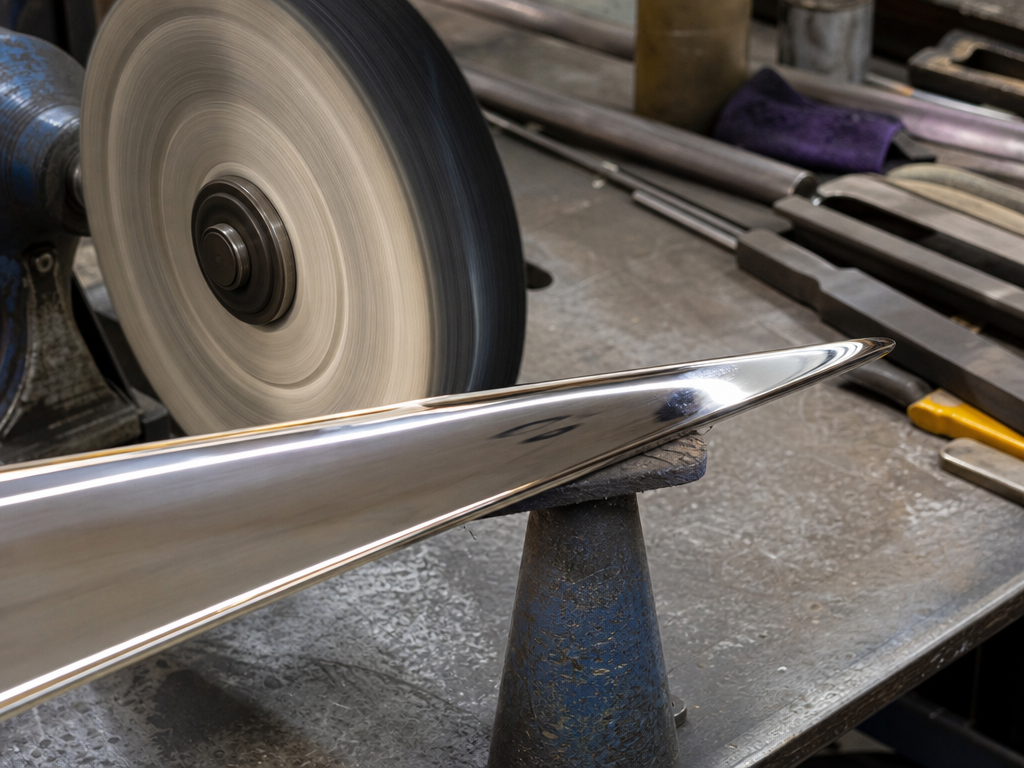
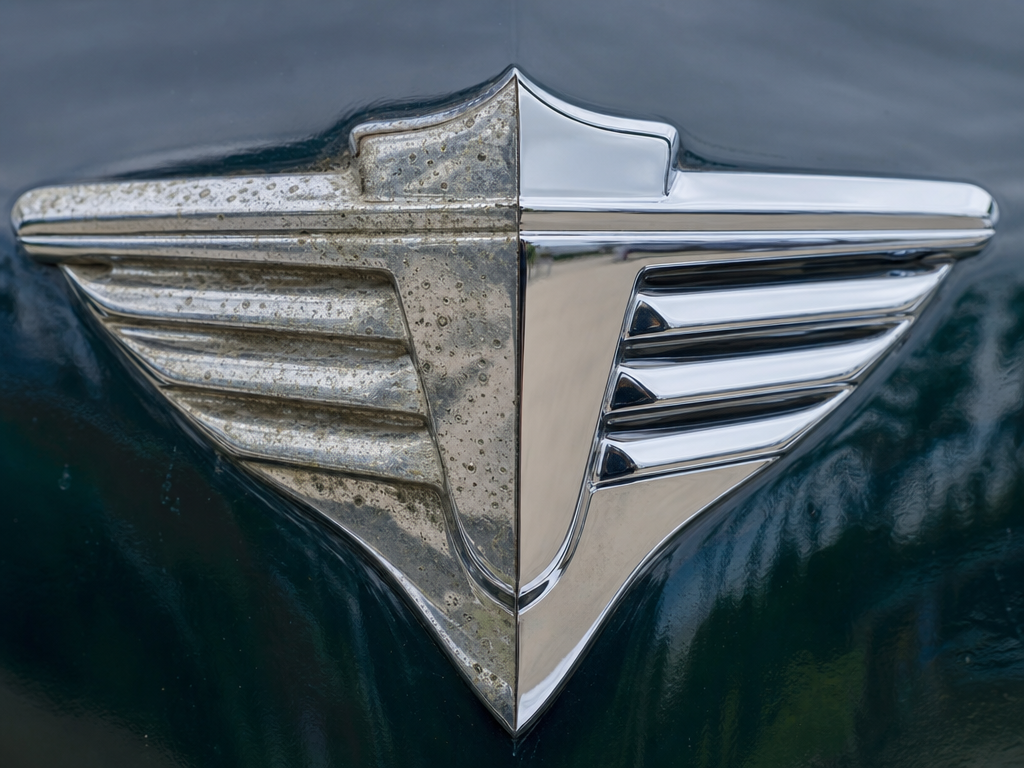
Stainless trim polished to a mirror finish during restoration Pitted versus restored chrome emblem comparison
What We Find

Brightwork Problems We See on Gulf Coast Classics

Pitting from the Inside Out

Pot metal grilles and bezels erupt with pinhole pits as the casting corrodes internally — polishing makes it worse. Real repair means stripping, excavating the pits, filling, and re-plating. Anything less returns within a year.

Over-Buffed Detail Loss

Trim that's been to a volume polisher: character lines rounded off, emblem recesses smeared, mounting studs burned. Metal doesn't grow back — which is why we file and block stainless by hand instead of leaning it into a wheel.

Cheap Rechrome Peeling

Budget plating skips copper cycles and polishes the nickel thin; it looks acceptable at delivery and peels or clouds within a couple of Gulf summers. Plating quality is invisible on day one — that's exactly how the cheap shops get away with it.

Salt-Air Haze on Aluminum

Anodized trim from bay-side cars comes in chalky and gray — the anodic layer is corroded through. We strip the old anodizing, polish the aluminum, and refinish, restoring the satin sheen polishing alone can't reach.

Local Conditions

Why Houston Humidity Is Hard on Chrome and Trim

Brightwork corrodes in this climate faster than almost anywhere inland — and the mechanism is worth understanding, because it changes how the work should be done.

Chrome plating is porous at a microscopic level. In dry climates that hardly matters; in ours, humid air reaches the nickel and steel beneath through those pores every day, and the rust blooms you see on old bumpers are corrosion pushing up from underneath. Coastal salt air — Baytown, Pasadena, League City, anything near the Ship Channel — accelerates the cell dramatically. This is why plating thickness and full copper-nickel coverage aren't show-car vanity here; they're what determines whether the bumper looks right in five years.

Storage tells the same story. A classic in an un-climatized Houston garage sits in what amounts to a slow humidity chamber: chrome hazes, unprotected stainless dulls, and aluminum grows white oxide wherever the anodizing has thinned. We seal restored brightwork, wax plated surfaces before delivery, and give every owner the same advice — climate control or a dehumidifier is the cheapest brightwork protection money buys.

Once the trim is right, keeping the whole car right is a maintenance discipline — one our paint correction and cosmetic care service handles alongside the brightwork it frames.

The Quality Gap

Show Plating vs. Bumper-Shop Chrome

The chrome-heavy cars show the gap most: a Tri-Five Bel Air or Impala carries more brightwork than some entire decades of cars, and an El Camino's bed rails and tailgate trim take real abuse. Those are the cars this bench was built for.

Materials & Sourcing

Plating Standards and Trim Sourcing We Hold To

How It Works

Our Trim Restoration Process, Piece by Piece

01

Inventory

Every piece catalogued and photographed — condition, completeness, and what's missing flagged early.

02

Triage

Restore, source better, or re-plate — decided per piece with you, priced honestly.

03

Metal Work

Straightening, dent removal, pit repair, and finishing — the 90 percent that happens before shine.

04

Finish

Plating, polishing, or anodizing to the correct factory sheen — show mirror or original satin.

05

Fit

Installed with new hardware and gaskets, aligned to the panel gaps — and photographed for the record.

Questions We Hear

Chrome and Trim Restoration FAQs

Reproductions are often cheaper where they exist — and sometimes they're good. But repro bumpers vary wildly in fit and plating quality by platform, and for many cars they simply aren't made. We'll price both paths honestly; on a show car, restoring the original usually wins on fit alone.

Yes — properly. The pits get ground out, filled with solder, refinished, and the piece re-plated. It's labor-intensive, which is why most platers won't touch it, but it's the only repair that lasts. Chrome over pits is a one-year cosmetic.

Almost always. Stainless is wonderfully workable: dents come out from behind, creases can be annealed and worked flat, and the surface files and polishes back to a mirror. We save pieces owners assumed were scrap — bring them in before you buy replacements.

Yes. Plenty of clients send us boxes of trim while their car is elsewhere — or on their own garage schedule. Pieces come back restored, wrapped, and inventoried, ready for assembly whenever the car is.

A full car's brightwork typically runs 6 to 12 weeks — plating cycles are the long pole, and show-quality plating can't be rushed without showing it. On full restorations we start trim early so it's waiting on the car, never the reverse.

Service Coverage

Chrome and Trim Restoration Across Greater Houston

Brightwork comes to us from the whole metro — on cars, in boxes, and occasionally in five-gallon buckets. However yours arrives, it leaves looking like jewelry.

Finish the Car Properly

Send photos of your trim — the good, the pitted, and the dented. We'll tell you what restores, what replaces, and what it takes to make the brightwork match the paint.

(713) 555-0180