Period-correct or upgraded. Never guessed at.
A beautiful car that runs badly is a sculpture. We rebuild classic engines and drivelines in-house — measured, machined, blueprinted, and broken in — so the car underneath the paint is as honest as the finish on top of it.
Most restoration shops send engines out. We stopped doing that fifteen years ago, and here's why: when the machine work, assembly, and tuning happen under someone else's roof, accountability gets fuzzy exactly where it matters most. The engine is the one system in the car that can leave you stranded — so it's the one system we refuse to subcontract.
Our position is simple: a rebuild is a measurement exercise before it's a parts exercise. Anyone can throw a gasket set and new bearings at a tired small block. We measure everything — bores, journals, decks, valve guides — decide what the engine actually needs, and build to a written spec you get a copy of. That spec sheet follows the engine the way the photo record follows the car through our documented build process.
Small-block and big-block Chevy, Ford FE, Windsor and Cleveland, Mopar LA and B/RB, Pontiac, Olds, Buick, AMC, and the inline sixes everyone else turns away. If it burned gasoline before 1980, we've probably had one apart on our bench.
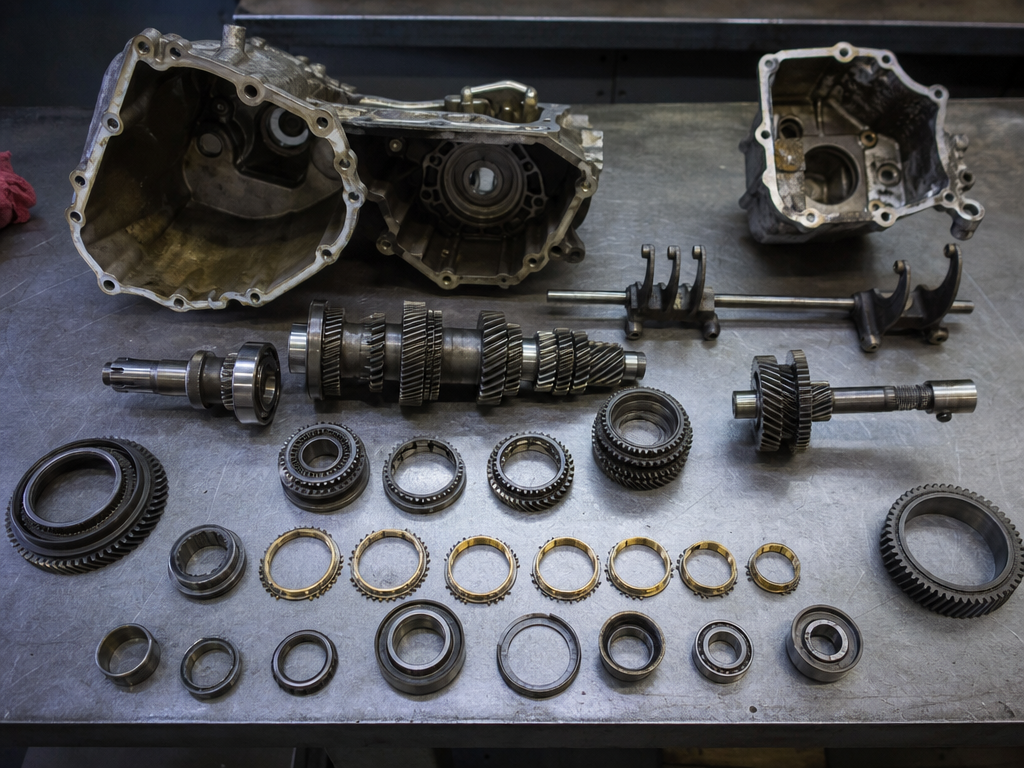
Complete engine rebuilds — teardown, hot-tank, magnaflux, machine work, blueprint assembly, cam break-in, and tuning. Plus the rest of the driveline: manual and automatic transmission rebuilds, clutch systems, driveshafts, and rear axle assemblies including gears and limited-slip units.
A classic that starts hot, idles cool in August traffic, and drives across Texas without a chase truck. Correct oil pressure, correct compression, correct shift behavior — and if you want more than factory, a rebuild is the honest time to choose it: cam profile, compression ratio, gearing.
We build street engines and strong street/strip engines. We don't build max-effort race motors, and we won't chase horsepower numbers that make a classic undrivable. If your goal is a 9-second car, we'll say so and point you to a race shop — respectfully.
Every rebuild starts with a forensic teardown. We're reading the engine's history as it comes apart — bearing wear patterns, cylinder taper, valve recession, evidence of overheating or detonation. Castings get cleaned, crack-checked, and measured before any decision is made. Numbers-matching blocks and heads are treated as irreplaceable, because they are: we repair and sleeve original castings where a lesser shop would toss them.
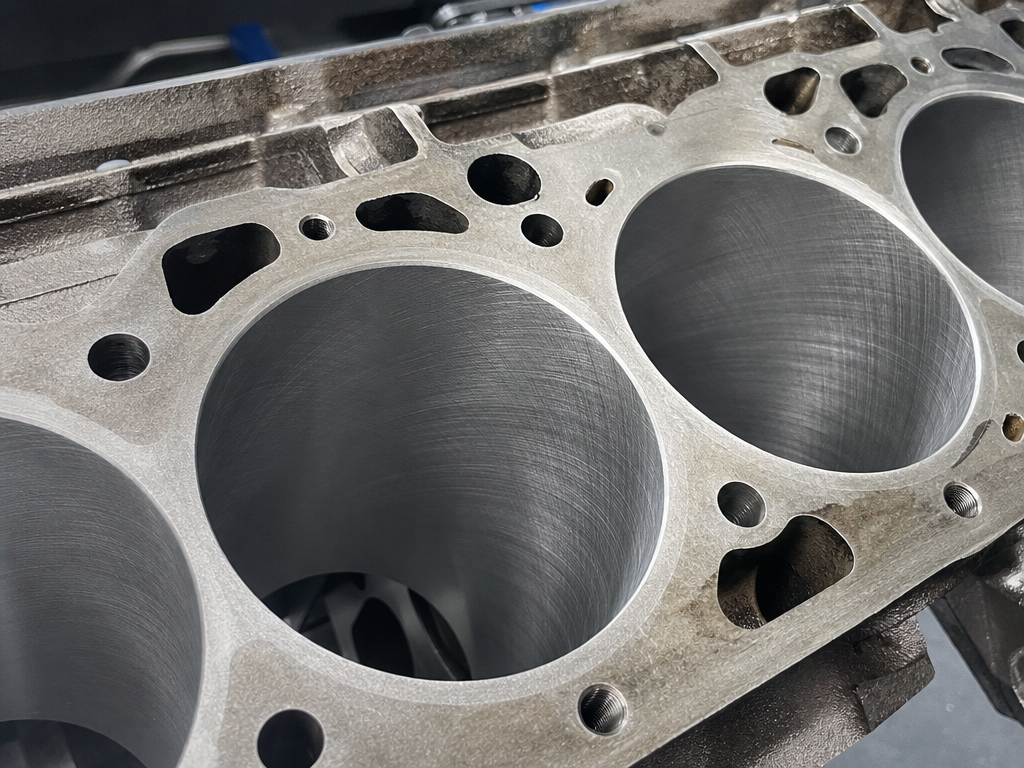
Machine work follows the measurements, not a menu: bore and hone with torque plates, align-hone if the saddles need it, deck to a verified height, three-angle valve job with new guides and seals. Assembly is blueprint-grade — every clearance checked with a micrometer and plastigage, every rotating assembly balanced, every torque value logged on the build sheet.
Then the part most shops skip: proper cam break-in and tuning on first fire, with timing, mixture, and oil pressure verified before the engine ever goes back between the fenders. Rear axles and gearboxes get the same discipline — pattern-checked gears, correct preloads, fresh synchros or clutch packs. And because a strong drivetrain exposes weak supporting systems, we'll tell you plainly if the car also needs brake and suspension work or a wiring harness restoration to carry the power safely.
Fifty-year-old engines fail in predictable ways — and most of them are invisible until teardown.
Wrong bearings, mismatched pistons, silicone where gaskets belong, head bolts into water jackets without sealer. Roughly a third of the "rebuilt" engines that come to us were assembled, not rebuilt — and the paperwork can't tell you which one you bought.
Taper, out-of-round bores, and scored journals from decades of short trips and old oil. These engines will run — badly, with low oil pressure and blow-by — right up until they don't. Measurement catches what a compression test alone won't.
Varnished tanks, dissolved rubber lines, corroded carburetor bowls and jets. Modern E10 fuel attacks components engineered for leaded gas, so every rebuild we deliver includes ethanol-tolerant lines, gaskets, and a properly restored or replaced carburetor.
Worn synchros that grind second, TH350s slipping on worn clutches, whining ring-and-pinions with pattern wear. The driveline behind the engine ages just as hard, and rebuilding it while the car is apart costs a fraction of doing it later.
A classic engine that survives Houston has to be built for Houston. That shapes real decisions in every rebuild we do.
Start with the heat: idling in August traffic on the Loop is a harder cooling test than a highway pull anywhere else in the country. We spec cooling systems accordingly — correct-core radiators or upgraded equivalents, proper fan shrouds, verified timing curves — because most "running hot" complaints on classics here are really assembly and tune problems compounded by a marginal radiator.
Then the fuel. Nearly every pump in Texas is E10, and ethanol is hygroscopic — it pulls moisture straight out of our Gulf-humidity air and into your tank, where it corrodes steel lines and turns to acid as it sits. Cars stored between weekend drives suffer worst. Every fuel system we touch gets ethanol-compatible rubber, cleaned or replaced tanks, and carb internals that tolerate modern gas.
And humidity attacks parked engines from the inside: cylinders rust above the rings, distributor internals corrode, and gaskets dry-rot in un-climatized storage from Conroe to Baytown. It's part of why so many local classics come to us as part of a full frame-off restoration — by the time the engine needs this much help, the rest of the car usually does too.
Both engines fire on the first turn of the key. One of them is still healthy 30,000 miles later.
Owners choosing between factory-correct and modernized drivetrains should read our take on restomod vs. numbers-matching — the right answer depends on the car, and we argue both sides honestly.
Parts selection is where budget rebuilds hide their corners. Our defaults are boringly consistent.
Big-block cars are our steady diet: 396 and 454 Chevelles, 383 and 440 Road Runners and GTXs, FE Fords, and Pontiac 400s all cross the bench regularly.
We talk about how you drive the car and what "done" means to you — stock, spirited, or long-haul reliable.
Forensic disassembly, cleaning, crack-checking, and full measurement. You get the findings in writing.
Machine work to spec, balanced rotating assembly, blueprint assembly with logged clearances.
Proper cam break-in, timing and carburetion dialed, leaks and pressures verified hot.
Installed and road-tested, or crated with the build sheet if we built it as a standalone project.
Yes — that's most of what we do. The original block, heads, intake, and date-coded accessories stay with the car. We machine conservatively, sleeve rather than scrap when a bore is beyond limits, and document everything so the rebuild adds to the car's story instead of erasing it.
It depends on the car's job. A show car or investment-grade classic usually deserves factory spec. A weekend driver often benefits from a mild cam, hardened seats, and modern bearings — invisible from outside, better to live with. We'll walk you through both quotes.
Yes — Muncie, Saginaw, Borg-Warner and Toploader four-speeds, TH350/TH400, C4/C6, and Torqueflite automatics, plus 10- and 12-bolt, 8.75" Mopar, and Ford 9" rear ends. The whole driveline gets rebuilt under one roof, which is the only way the pieces are guaranteed to work together.
A standalone engine typically runs 8 to 14 weeks depending on machine work and parts availability — rare castings and NOS components can stretch that. Inside a full restoration, the engine is sequenced so it never holds up the rest of the build.
Compression and leak-down numbers, oil pressure hot at idle, blow-by, and oil consumption tell the truth. We test before we recommend anything. Plenty of engines that come in for a rebuild leave with a tune, a carb restoration, and honest news — the test results decide, not the sales pitch.
Engines and complete cars come to our Navigation Boulevard shop from every side of the metro. If the car doesn't run, we'll arrange the transport — that's a logistics problem, not your problem.
Tell us what the car does now — hard starts, low oil pressure, tired shifting — and what you want it to do. We'll test first and talk straight.
(713) 555-0180