Cosmetic & Paint Correction — Houston, TX

Classic Car Paint Correction
Protecting What's Already Right

For restored cars that need to stay restored.

A restored finish is an investment with a maintenance schedule. We correct swirl, haze, and oxidation with restoration-shop judgment — we know what's under the clear because we spray it ourselves — and we protect it with coatings built for the Gulf Coast.

200+Restorations Completed
AllMakes & Eras
18Years in Houston
5.0★Google Rating
Our Position

Why Paint Correction on a Classic Belongs in a Restoration Shop

Here's what we believe, having buffed through other people's mistakes for 18 years: paint correction on a collector car is not detailing. A detailer sees the surface. We see the film build underneath it — how many mils are left, whether that's lacquer or urethane, whether the last "correction" already burned through an edge someone glazed over to hide.

Classic paint is a finite resource. Every aggressive polish removes material that never comes back, and single-stage lacquer on a survivor car can be forty years old and thinner than a business card. Our correction work starts with a paint-depth gauge and an honest conversation, because the most valuable thing we can tell you is sometimes "don't polish this car — preserve it."

"Anyone can make paint shiny once. The skill is making it shiny without spending paint you can't afford."
Scope, Honestly

What Our Cosmetic and Paint Correction Service Covers

What It Is

Measured, staged paint correction — from single-stage polish to full multi-step cut and refine — plus ceramic coating, show prep, engine-bay and underhood detailing, brightwork polishing, and interior cosmetic care. Every step preceded by paint-depth readings across the car.

What It Unlocks

Restored-car gloss maintained at restored-car level: swirl-free reflections, oxidation reversed on tired original paint, and a coated surface that sheds Houston's UV, rain, and highway film instead of absorbing them. Show cars arrive at the field ready to be judged.

Where It Stops

Correction can't fix failing paint. If the clear is delaminating, filler is printing through, or rust is lifting from behind, no polish helps — that car needs our body and paint shop, and we'll show you exactly why on the paint gauge rather than sell you a buff that hides it for a season.

The Work

Multi-Stage Correction and Ceramic Protection in Detail

Every correction starts with measurement and decontamination: paint-depth readings logged panel by panel, then a chemical and clay decontamination that pulls bonded fallout off the surface so the polisher never grinds it back in. On original-paint survivors we test in an inconspicuous spot first — lacquer, enamel, and urethane each demand different pads, compounds, and patience.

The correction itself is staged to the paint's condition and your goal. A well-kept two-stage finish may need only a one-step refine. A show car chasing perfect reflections gets compound, polish, and jeweling stages under inspection lighting, with edges and body lines taped or worked by hand — edges are where amateurs strike through, and there's no undo on a strike-through.

Protection is the second half of the job. We apply professional ceramic coatings rated for years, not months, and finish brightwork alongside the paint — polished stainless and fresh chrome from our chrome and trim bench frame a corrected finish the way the factory intended. Cabin cosmetic care rides along on request: leather feeding, vinyl conditioning, and the light touch-ups that keep a finished interior restoration looking finished.
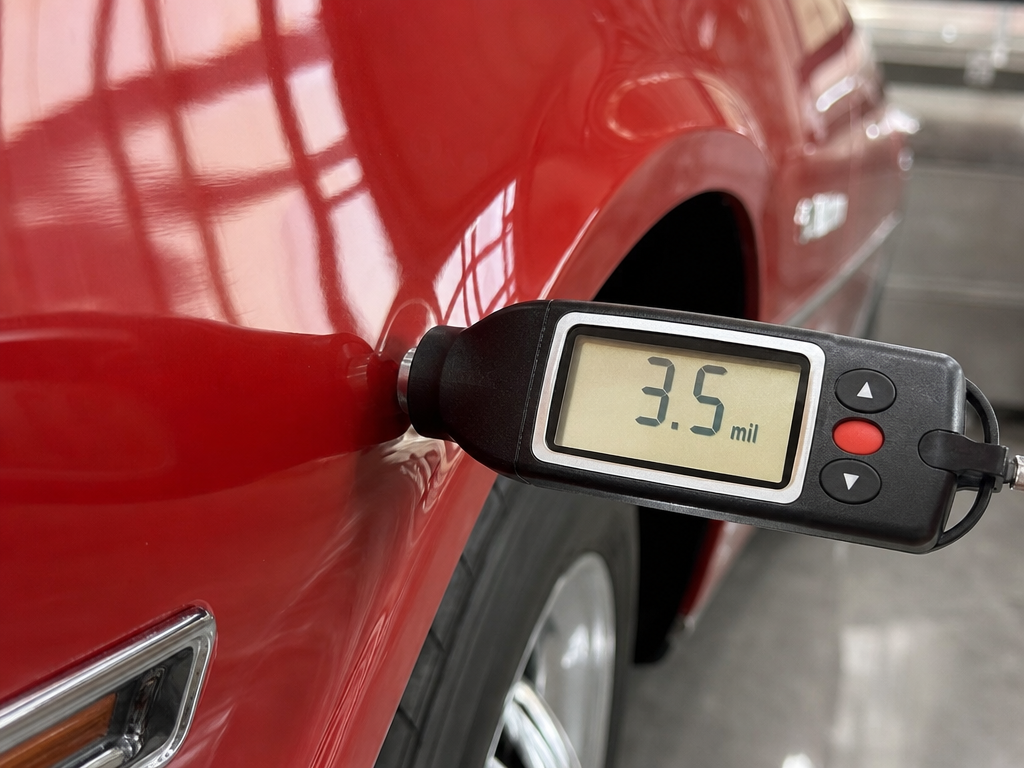
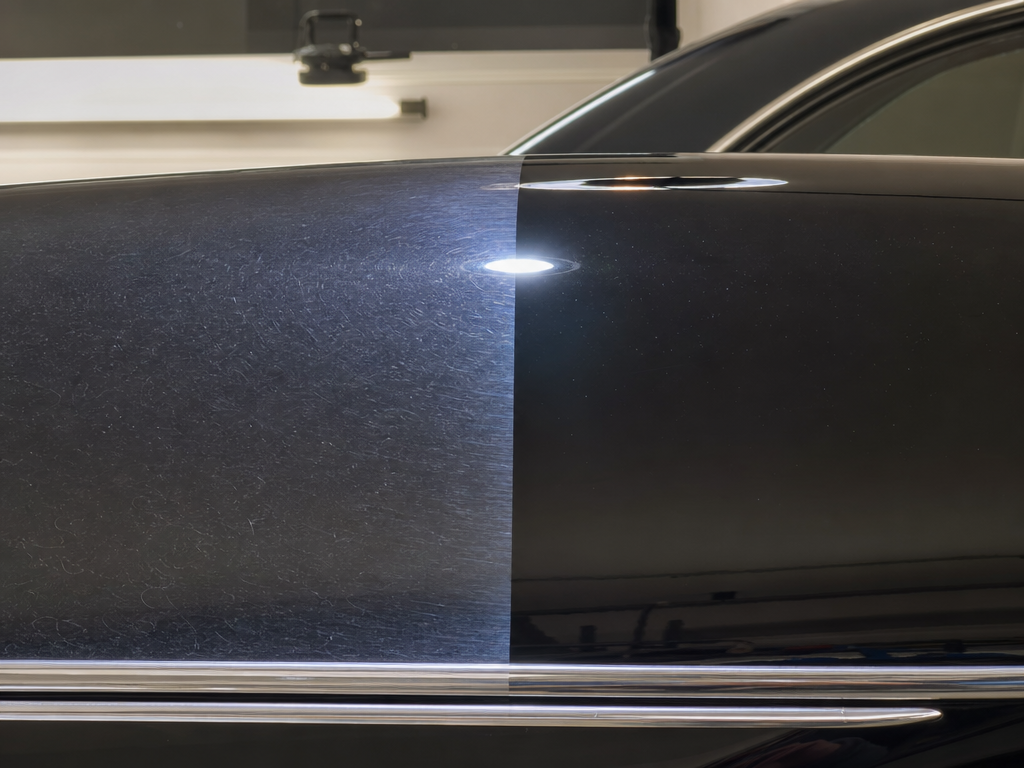
Paint depth measurement before classic car paint correction Before and after paint correction on a classic car panel
What We Find

Finish Problems We Correct on Restored Classics

Swirl and Buffer Trails

Usually installed by the last person who "detailed" the car — rotary halos and micro-marring that turn sunlight into a spiderweb. Corrected with staged polishing, then prevented with proper wash technique we'll happily teach you.

Oxidized Single-Stage Paint

Chalky red hoods and hazy blues. Original single-stage often revives beautifully — the color is still alive under the dead layer — but it takes gentle, measured work. This is exactly the paint you don't hand to a volume detailer.

Water Spots and Fallout Etching

Houston's mineral-heavy water and industrial fallout etch clear coats left outdoors. Light etching polishes out; deep etching gets an honest verdict — sometimes the fix is correction, sometimes it's respray, and the gauge decides.

Previous Strike-Throughs and Glaze Jobs

Burned edges hidden under glaze, thin spots that fail the next time anyone polishes the car. We find them with the gauge, document them, and plan around them — no surprises mid-job.

Local Conditions

Keeping Show Paint Alive in Houston's Climate

This climate is a paint-aging accelerator. Correction here is maintenance, not a once-a-decade event.

Gulf Coast UV is the big one — it chalks single-stage and cooks clear coat faster than anywhere north of Florida, and a garaged car still eats UV every weekend drive. Ceramic protection with real UV inhibitors measurably slows that clock, which is why we coat nearly every finish we correct.

Humidity and rain do subtler damage: mineral-loaded water spots etch overnight in summer heat, and morning condensation keeps paint wet for hours in a way dry-state cars never experience. Add industrial fallout along the Ship Channel side of the metro — cars from Pasadena and Baytown carry measurable bonded iron — and decontamination becomes a mandatory first step here, not an upsell.

If your finish is already past what correction can save, we'll show you the readings and talk honestly about what failed and why — the same failure chain we document in why cheap paint fails on a restored car.

The Quality Gap

Measured Correction vs. a Heavy Buff

High-impact Mopar colors show the difference most dramatically — a corrected Plum Crazy or Go Mango Challenger under sun looks lit from inside, and a swirled one looks like a toy. That gap is technique, not paint.

Materials & Products

Correction Products and Coatings We Use

How It Works

Our Paint Correction Process, Step by Step

01

Assess & Measure

Paint-depth mapping, lighting inspection, and an honest verdict on what correction can and can't do.

02

Decontaminate

Wash, chemical decon, and clay so the surface is truly clean before any machine work.

03

Correct

Staged cut and polish matched to the paint system, edges protected, progress checked under inspection light.

04

Protect

Ceramic coating applied and cured properly; brightwork polished to match the finish.

05

Handoff

Care instructions, wash technique, and the depth log — so the finish stays corrected.

Questions We Hear

Paint Correction FAQs

Often, with the right hands — but not always. We measure first, test in a hidden spot, and sometimes recommend preservation over polishing. Original paint only exists once; on survivor-grade cars that patina is provenance, and we treat it that way.

Judgment and stakes. We restore and spray these finishes ourselves, so we know film builds, paint chemistry by era, and where previous work hides. A collector finish is a five-figure asset — the correction should come from people who could rebuild it if they had to.

It slows UV damage measurably and makes wash maintenance dramatically safer — most swirl comes from washing, and coated paint releases dirt with far less friction. It is not force-field marketing: garaging still matters. Coating plus garage is the combination that keeps show paint alive here.

Done right and maintained right, a full correction should last years — annual light refinement at most. If a car needs heavy correction every year, the wash routine is the problem, and we'd rather fix that with you than sell you the same job twice.

Yes — show prep is a specialty: full correction, coating, brightwork, engine bay, underside detail, and the final wipe-down standards judges actually check. For auction cars we also document the finish condition, which supports the listing honestly.

Service Coverage

Classic Car Paint Correction Across Greater Houston

Collector cars come to us for correction from across the metro — often ahead of shows, auctions, and appraisals. Enclosed transport available for cars that don't drive in the rain. Ever.

Keep It Looking Finished

Bring the car by for a paint-depth assessment. We'll tell you what the finish needs, what it doesn't, and how to keep it alive in this climate.

(713) 555-0180